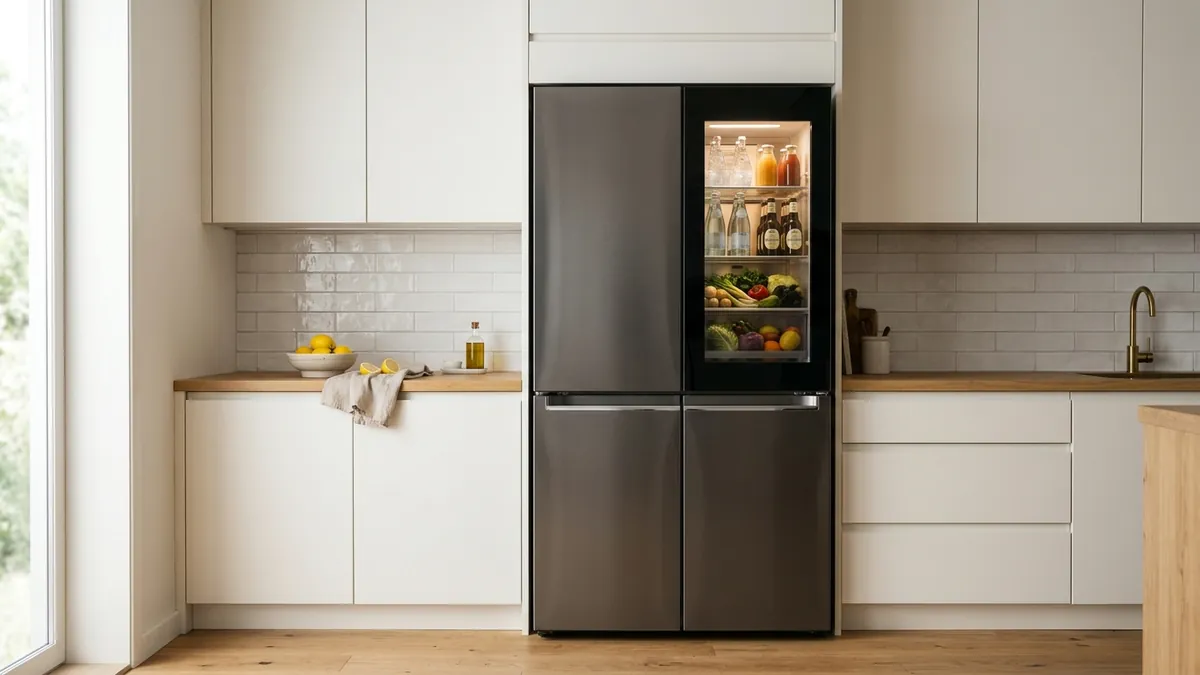
The fridge keeps beeping even though every door looks shut, an interior light stays on, the doors sit at different heights, or one door doesn't seal against the cabinet.
Every LG fridge has a switch per door, either a push button or a magnetic reed switch hidden in the top hinge cover. A sticky push switch, a cracked actuator or a reed switch that has drifted out of its pocket keeps the alarm going and often leaves the light on and the dispenser dead.
Reed switches are triggered by a magnet in the door. If the magnet loosens, shifts or loses strength, the switch can't tell the door is closed. On some models the magnet can be replaced alone, on others it's built into the door.
This is the classic new-fridge problem. When doors are removed for delivery, the plugs under the hinge cover may not get reconnected. On several French door models the humidity sensor plug and the door switch plug are the same size and are easy to swap, which causes a nonstop alarm, lights that stay on and a dispenser that won't work.
After years of opening and closing, the wires running to the door-in-door switch can break inside the door. The alarm then sounds even with everything shut. This one is confirmed with a continuity test on the switch wires.
A door that sits low or tilts won't press its gasket evenly, so it doesn't quite close the switch and lets warm air in. Alignment comes from the hinge nut, snap rings and hinge shims. A gasket that's torn or flattened needs replacing.
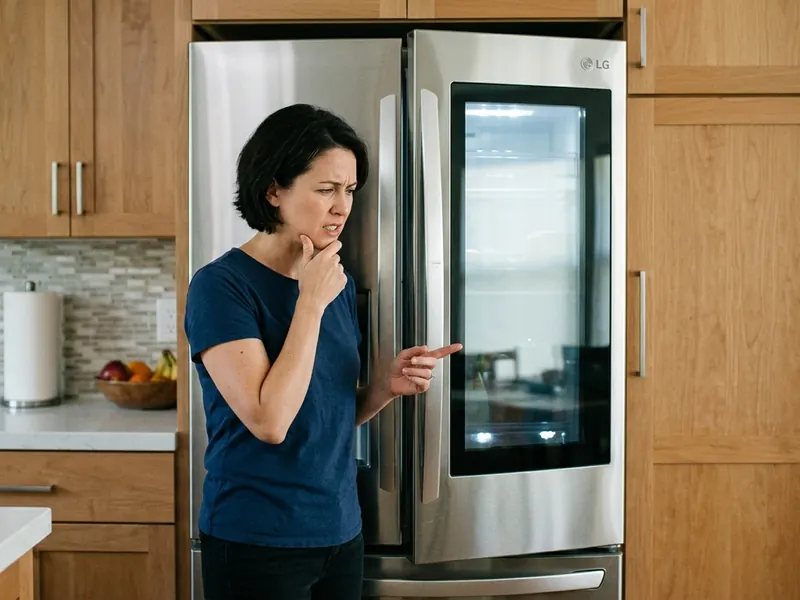
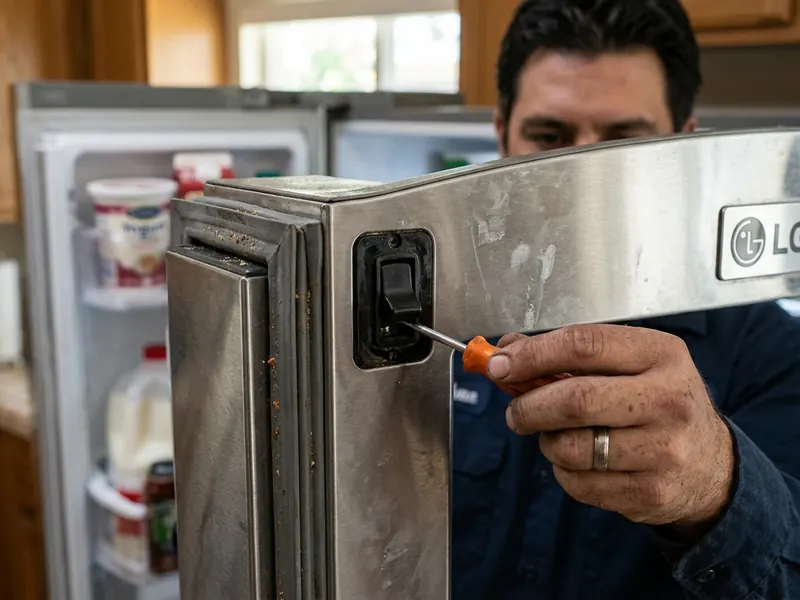
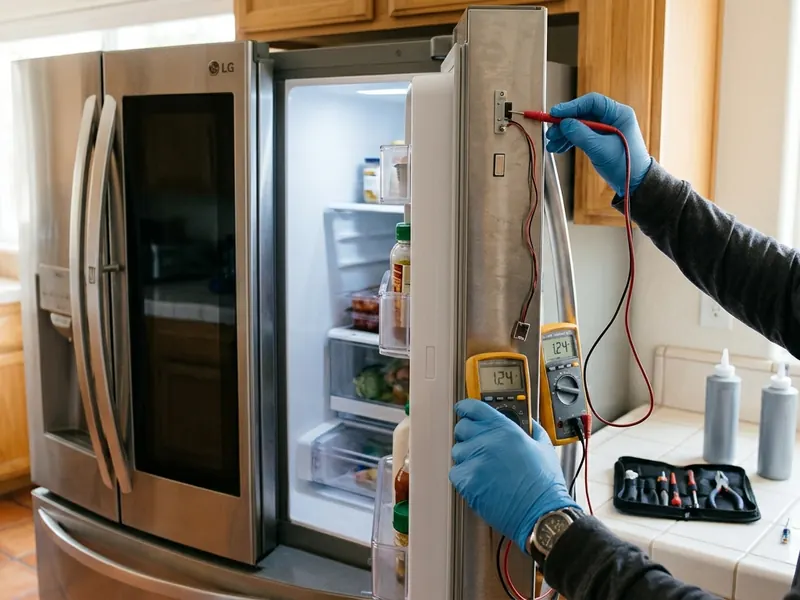
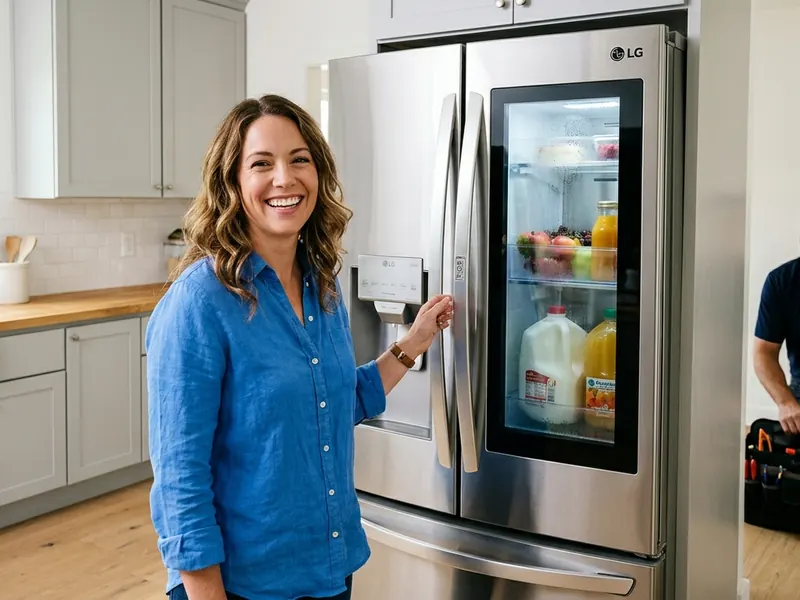
We start with the lights. A light that stays on points straight at a door. Some doors have a switch but no working light, the left door on many LG French door models has a dummy light, and freezer drawers trigger the alarm without lighting anything. So we press or magnet-test each switch one at a time and watch which action stops the alarm.
A reed switch should show continuity with a magnet over it and open when the magnet is removed. For a door-in-door switch we check the two wires going into the door, usually orange or yellow: open with the door open, continuity with the door closed. No continuity with the door shut means a broken wire inside the door.
We take off the top hinge covers and confirm each plug is seated and in the right socket, especially the humidity sensor and door switch plugs on the right door. Then we check the main board. On LED models, opening a fresh food door should put roughly 11 to 13V DC on the light circuit. If the board doesn't respond correctly with a good switch, the board is next.
Last we level the doors and check the seal. Low doors are raised with the lower hinge nut or snap rings under the hinge washer. A gap at the top or bottom between the French doors is set by shifting the door within its hinge slots and adding a thin shim, about half a millimeter at a time, behind the lower hinge. Then a flashlight inside the closed door shows any spot where the gasket doesn't touch.
If your fridge started beeping the day it was delivered, it's almost always a hinge plug that wasn't reconnected, or two plugs swapped. That's a short visit for us. On older fridges we test every switch and magnet before suggesting a new door. A right French door that feels like it catches just before it closes, or a door that slows down at the end, is usually normal latch or soft-close behavior, not a defect.
The control board is reading one of the doors as open. That's usually a door switch that isn't being pressed, a magnet that moved, or a plug under the hinge cover that came loose or got swapped. A light staying on inside usually tells you which door.
LG disables ice and water whenever the board thinks a door is open, so the same switch fault causes both problems. Fix the switch and the dispenser comes back.
Not usually. Closing one door pushes a burst of air through the cabinet, and the other door can bounce slightly. If it settles and closes on its own, it's normal. If it stays open, check alignment and the gasket.
Factory authorized LG repair, parts on the van, 90-day warranty. Same-day across Orange County.