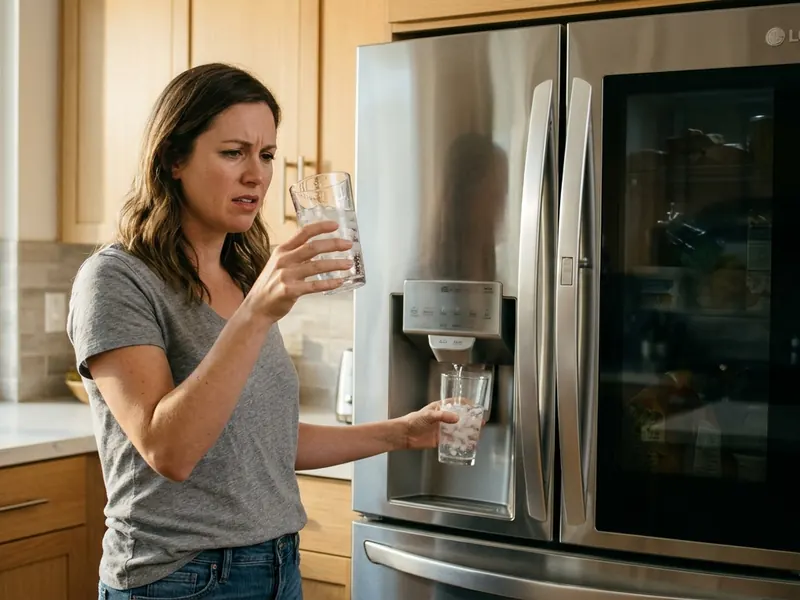
Water or ice from the dispenser tastes like plastic, rubber, metal or even mint, smells off, or leaves small white flakes in the glass as the ice melts.
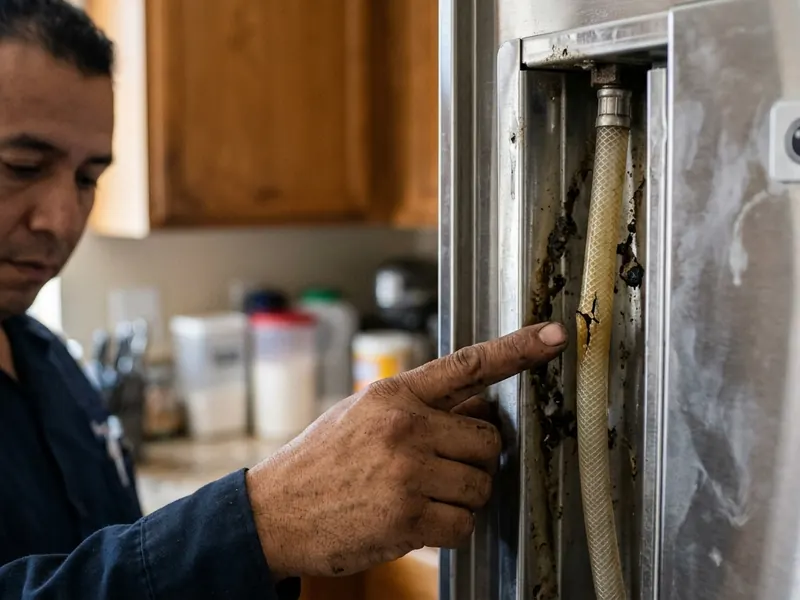
The line behind the fridge makes a bigger difference than people expect. Braided nylon or plastic lines can give a chemical or rubbery taste. Cheap non food grade plastic tubing often makes the ice taste like mint. Braided stainless lines have a rubber liner inside and can give a plastic or metallic taste. New copper can taste oily or metallic until it's flushed. We recommend PEX or properly flushed copper.
A filter past its six month life can let tastes and odors through, and off-brand filters don't always seal or filter the same way. A new filter also needs a good flush, otherwise the first glasses can taste flat or slightly carbon-like.
Ice is very good at absorbing smells from the freezer and fridge air. Uncovered leftovers, spilled food or old ice in the bin will flavor every cube.
If the water tastes fine but the ice doesn't, minerals or softener salts in your water are the likely cause. You can't taste them in liquid water, but they become noticeable when frozen.
As water freezes, dissolved calcium comes out as tiny white flakes of calcium carbonate. You see them floating as the ice melts. It's common with hard water or well water and isn't a fridge defect.
Often the water isn't bad, just different. Each filter removes different things, and many people are used to the taste from their old fridge. Some prefer the water unfiltered.

We taste water from the dispenser, from the kitchen tap and from the supply line itself, with the line disconnected from the fridge and run into a bucket. If the bad taste is already in the line, the fridge isn't the cause. If the line tastes clean and the dispenser doesn't, the problem is inside the fridge.
We pull the fridge out and look at what's feeding it. Braided, nylon or unmarked plastic lines are the usual suspects for a chemical, rubber or mint taste, and an aging copper line can turn metallic, especially with hard water. Swapping to PEX or flushing a new copper line with 5 to 10 gallons before connecting it usually solves it.
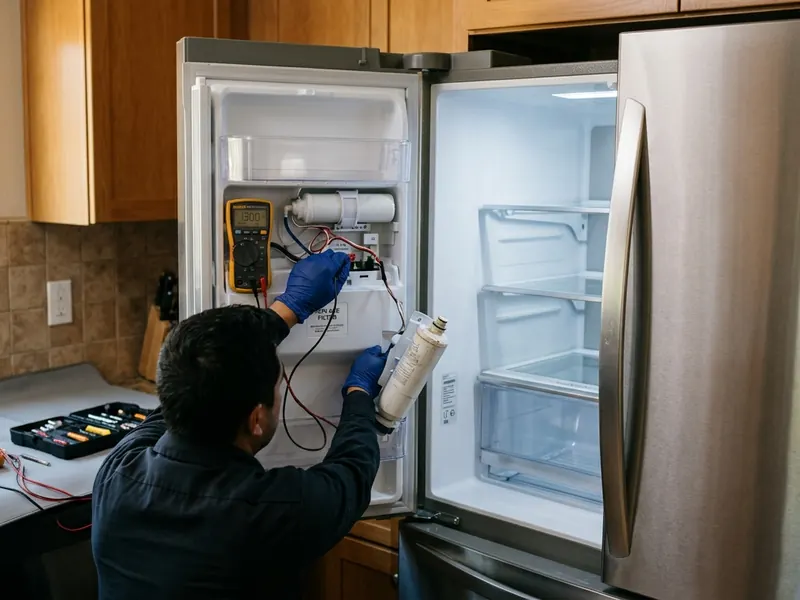
We check the filter's date and whether it's a genuine LG part, install a fresh one if needed and flush a couple of gallons through. We also compare taste with the filter in and out on models that allow it, because some people prefer one over the other.
If the water tastes fine but the ice doesn't, we look at the freezer air: odors, spilled food, an open baking soda box, and old ice in the bin. If the ice still tastes off in a clean freezer, the answer is usually minerals or softener in the household water, and a home water test kit will confirm it.
Most bad taste calls we take don't need a single fridge part. It's the supply line, an old filter or freezer odors, and we'd rather tell you that than sell you a repair. If the taste is in your tap water too, a water test is a better next step than a technician visit.
Usually the supply line. Non food grade plastic tubing often gives a mint taste, and braided lines can taste like plastic or rubber. Replacing the line with PEX or flushed copper normally fixes it.
Calcium carbonate from hard water. Calcium dissolved in the water turns into small white particles when it freezes, and they show up as the ice melts. It's common in hard water areas and isn't a sign the fridge is broken.
Ice picks up odors from the freezer, and minerals or softener salts become noticeable once water freezes. Clean the freezer, dump the old ice and use a closed baking soda box. If it persists, test your water.
Factory authorized LG repair, parts on the van, 90-day warranty. Same-day across Orange County.