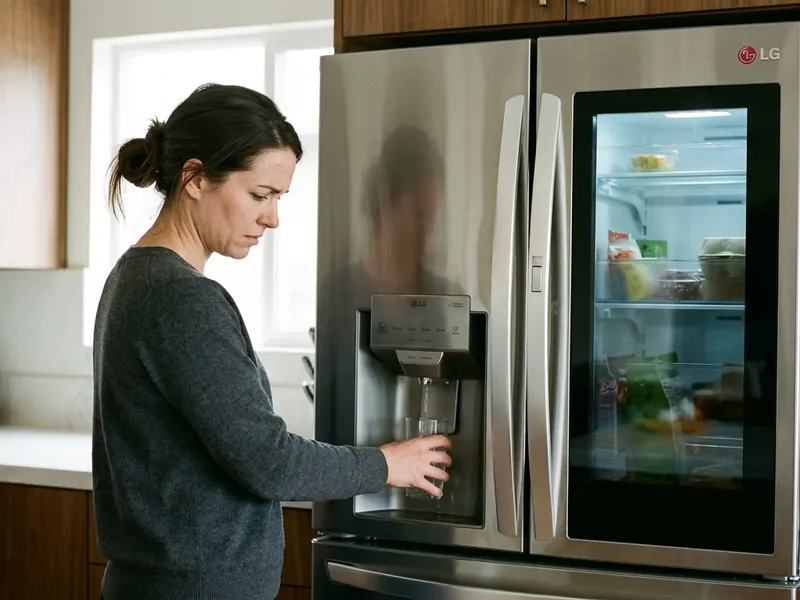
You press the paddle and nothing comes out, the water trickles so slowly a glass takes half a minute, or the spout keeps dripping after you let go.
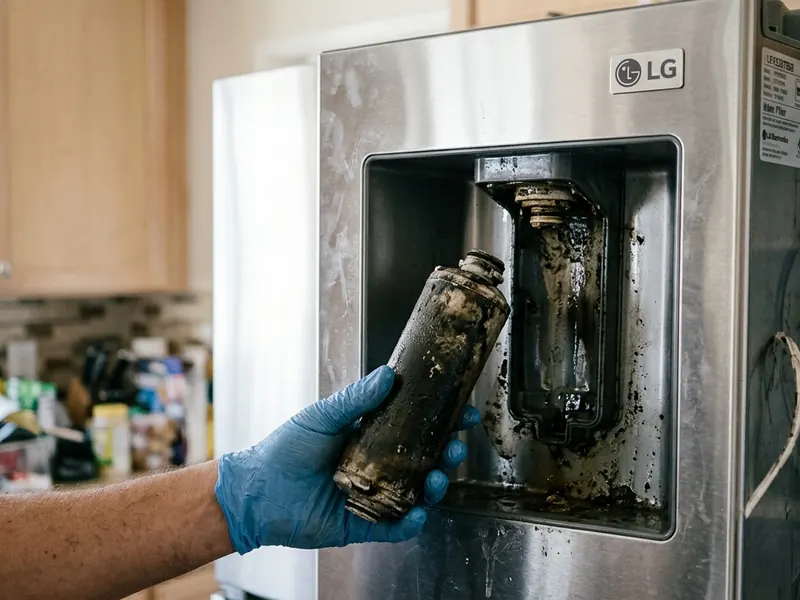
The most common reason for weak flow. A filter loaded with sediment can cut flow in half long before the indicator light says it's due. A quick test: remove the filter. Newer LG models have a built-in bypass, older ones need a bypass plug. If flow jumps back, the filter was the problem.
LG fridges want somewhere between 20 and 120 psi at the inlet. Reverse osmosis systems and whole-house filters often drop it below that, and the result is slow water plus small or hollow ice cubes. We measure pressure at the line before blaming the fridge.
Water only reaches the spout when two valves open together: the pilot valve in the machine room at the back and a second dispenser valve, which sits in the left door on many French door models and in the machine room or tank area on side by sides. If either coil fails or its connector loosens, nothing comes out. Units built from around 2018 use 24V DC valves, older ones run on 120V AC.
The control board shuts the dispenser off whenever it believes a door is open. A worn push switch, a weak door magnet over a reed switch, or a loose plug under the top hinge cover will kill water and ice at the same time, often with the interior light staying on.
On older side by side models the dispenser tubing runs under the cabinet and gets pinched when the fridge is moved or installed. A tube that runs through a cold door can also freeze if the freezer is set too low or the door seal leaks.
If the paddle doesn't register, the board never opens the valves. Dripping or water that starts on its own usually traces to a valve that doesn't fully seal or a paddle switch that sticks closed.
| Code | Meaning |
|---|---|
Er IF | Ice fan error. While any active error is on the display, LG suspends both water and ice dispensing until it's cleared |
We start with a measuring cup and a stopwatch. An 8 oz fill in about 3.5 to 8 seconds is normal. If it's slow, we check house pressure at the supply line and then pull the filter. Better flow without the filter means a filter problem. Same slow flow without it points us upstream to the supply line, the shutoff valve or a pressure-robbing RO system.
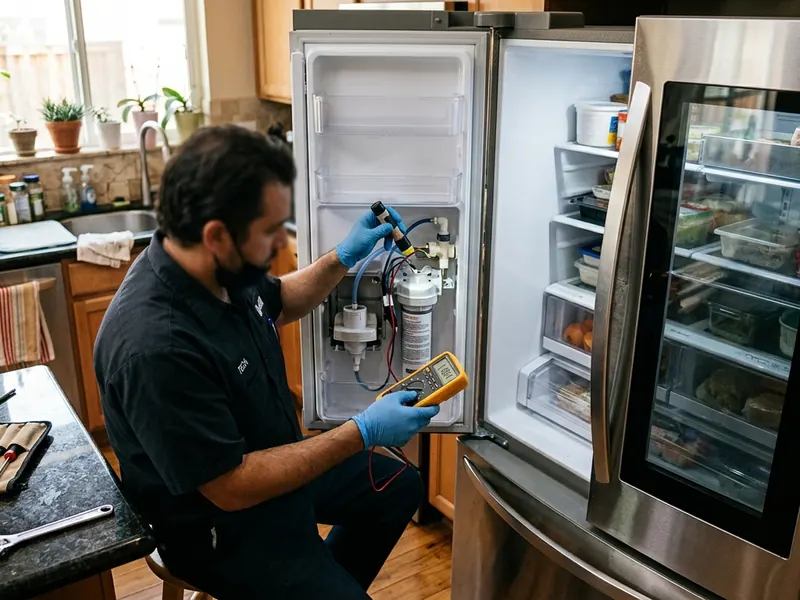
Before touching valves, we make sure the control board sees every door as closed. Push-type switches should turn the lights off when pressed. Magnetic reed switches in the top hinge covers should show continuity on a meter with a magnet over them and open when the magnet is pulled away. If the readings are wrong, we open the hinge covers and reseat each connector one by one.
With the paddle pressed, we check that the pilot valve and the dispenser valve both receive voltage, 120V AC on older units and 24V DC on newer ones. Voltage present but no water means a bad valve. No voltage means we trace back through the harness and connectors to the main or sub board, and we look closely for a bent pin or half-seated plug before condemning a board.
On models with separate ice and water switches, the board holds about 5V DC on the switch line and that voltage should drop when the paddle is pressed. A clean drop proves both the board and the switch. On single-switch dispensers, if ice works and water doesn't, the switch is fine and the fault is in the display board that selects the mode.
Most no-water calls we run turn out to be the filter, the supply line or a door switch, and we check those before any part gets ordered. When it really is a valve, it's usually a one-visit repair. We'd rather spend ten minutes with a meter than sell you a valve you didn't need.
The ice maker and the dispenser share the pilot valve but use different secondary valves and different controls. Ice with no water usually means the dispenser valve, the paddle switch or the display board. A frozen tube in the door is another possibility on French door models.
A few drops right after you dispense is normal, that's water left in the spout. Steady dripping or water that starts on its own means a valve isn't closing fully or the paddle switch is sticking. Shut off the supply valve if it won't stop and have it checked.
Often, yes. A clogged filter is the most common cause. If a fresh genuine filter doesn't bring the flow back to about 8 oz in under 8 seconds, the problem is water pressure, the line or a valve.
Factory authorized LG repair, parts on the van, 90-day warranty. Same-day across Orange County.