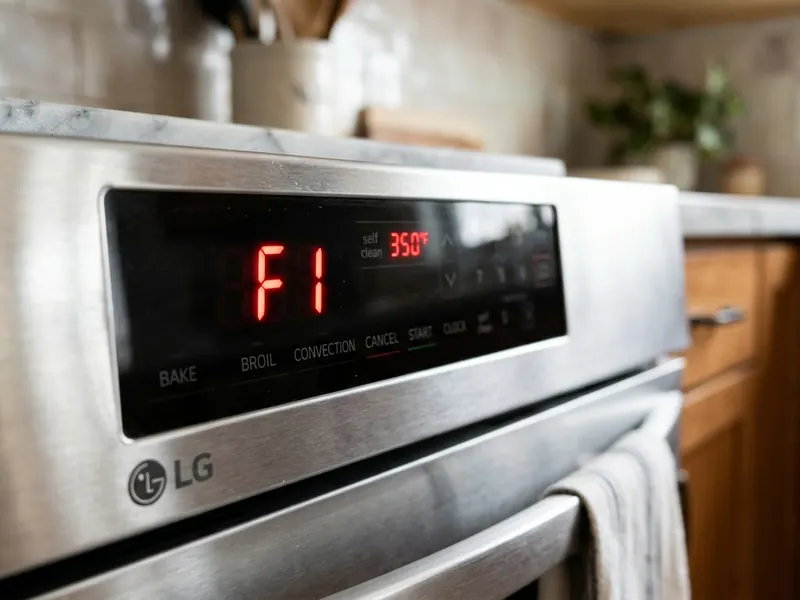
F1 | Upper oven temperature sensor fault | The main control board lost the signal from the upper oven temperature sensor, so it can no longer tell how hot the oven is. On a few older electric models (LRE3012, LRE30451, LRE30453, LRE30757) F1 points to the keypad instead. |
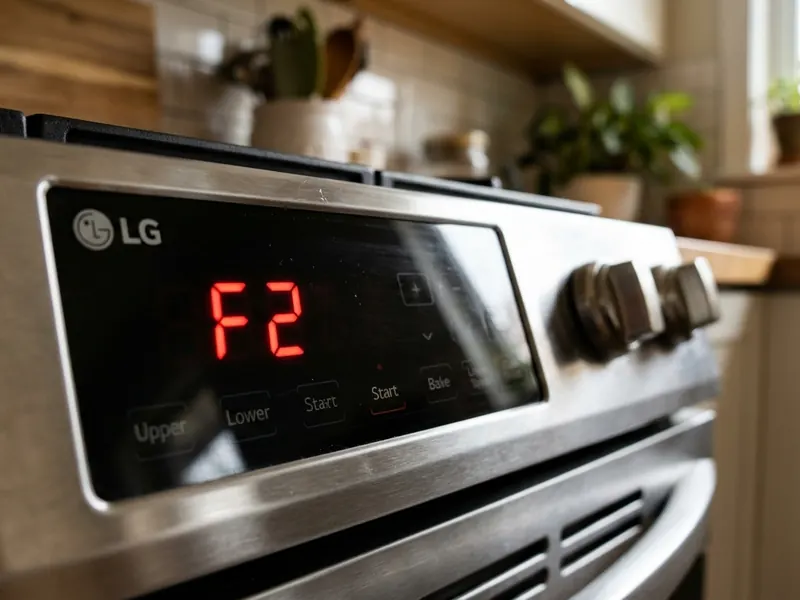
F2 | Upper oven sensor signal lost | On most current models F2 is another upper oven sensor fault, the board stopped seeing a valid reading from the probe. On the older LRE series electric ranges it means the door lock failed instead. |
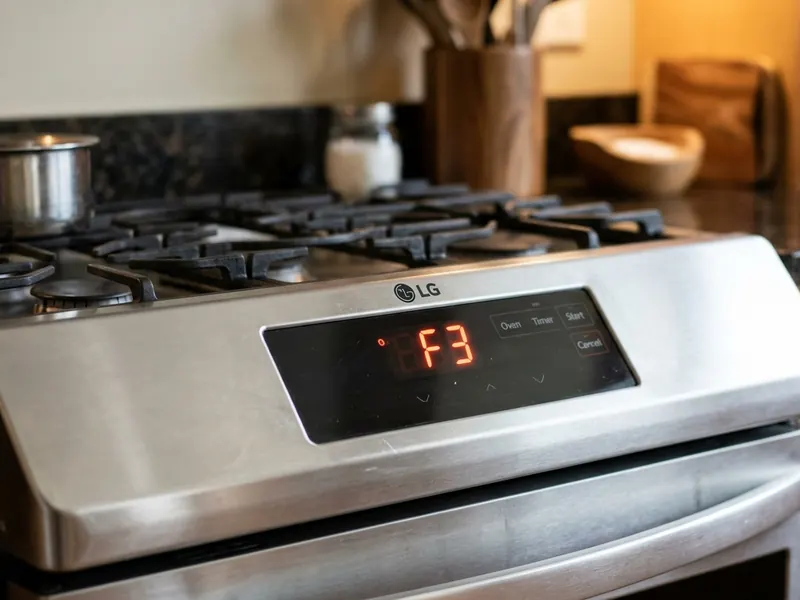
F3 | Stuck or shorted touch key | The control sees a key that is held, shorted or sending nonsense for about a minute. On the older LRE electric models F3 is a sensor fault instead of a keypad fault. |
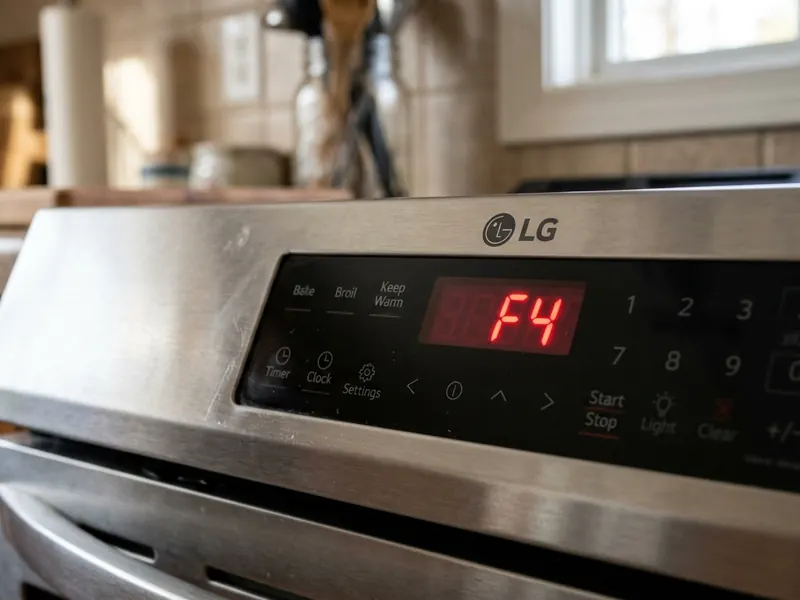
F4 | Lower oven sensor fault | Found on double oven models. The control lost the signal from the lower oven temperature sensor. |
F5 | Lower oven sensor fault | Another lower oven sensor code on double oven models. On the LRE30757 it means the warming drawer sensor is shorted. |
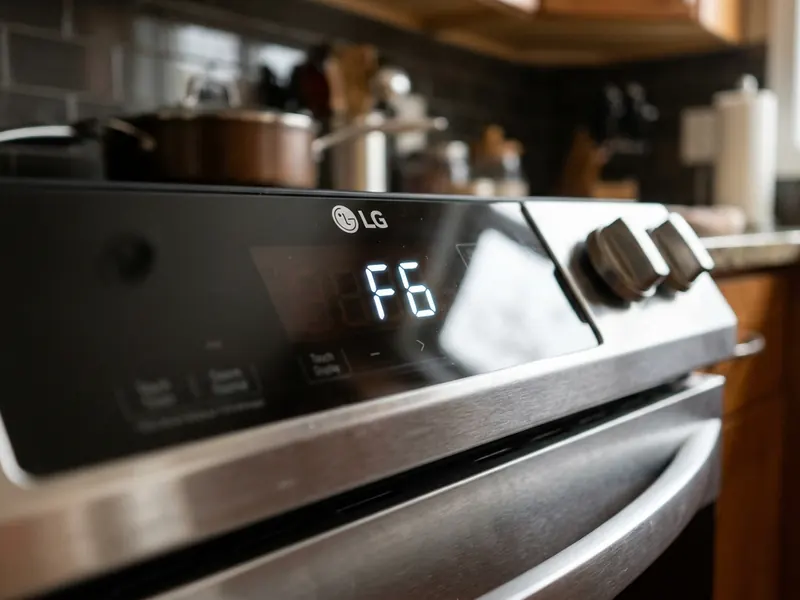
F6 | Upper oven overheating | The upper oven stayed above 650°F for more than two minutes outside of self clean. The control shuts heat off to protect the oven. On the LRE30757 it means the warming drawer sensor is open. |
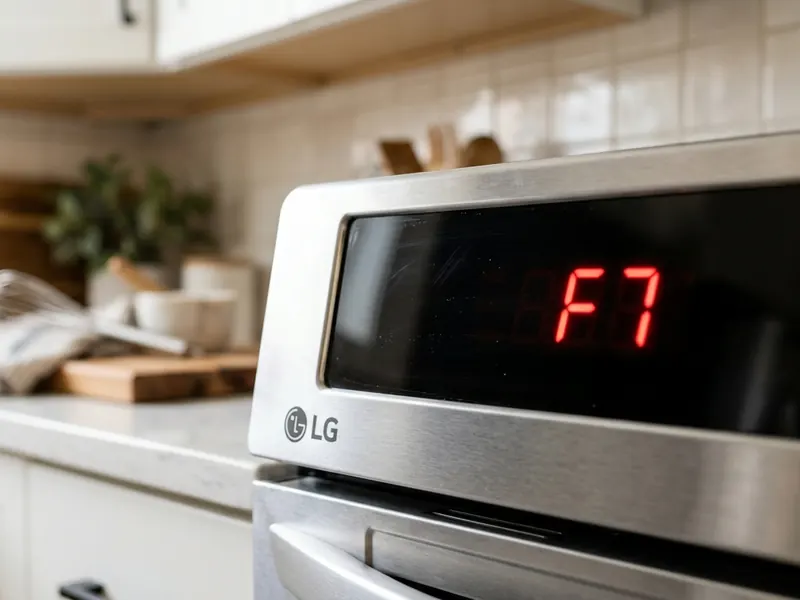
F7 | Upper convection fan not detected | The control turned on the convection fan but could not confirm it was spinning for about a minute. On older LRE electric models F7 means the oven is not heating. |
F8 | Upper meat probe fault | The board lost the signal from the meat probe jack in the upper oven within the first minute of cooking. |
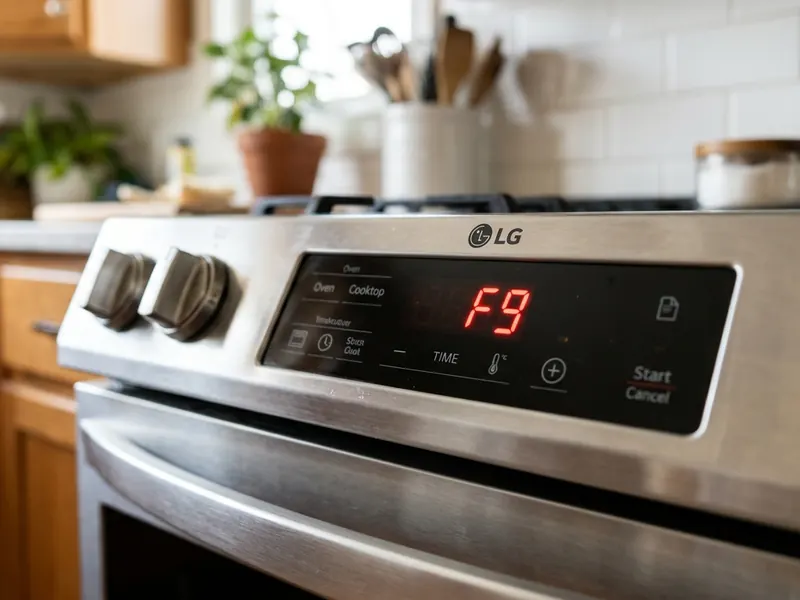
F9 | Oven not heating up | The oven started at 130°F or less with the door closed, and the temperature climbed less than 10°F in five minutes. The control assumes it is not heating. On older LRE electric models F9 means the oven ran too hot instead. |
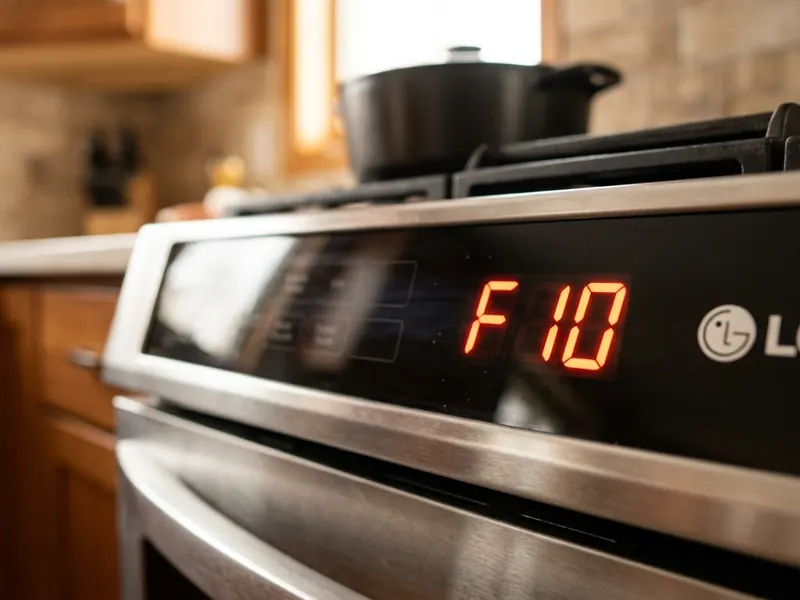
F10 | Upper door lock failed | At the start of self clean the control could not confirm the door locked. |
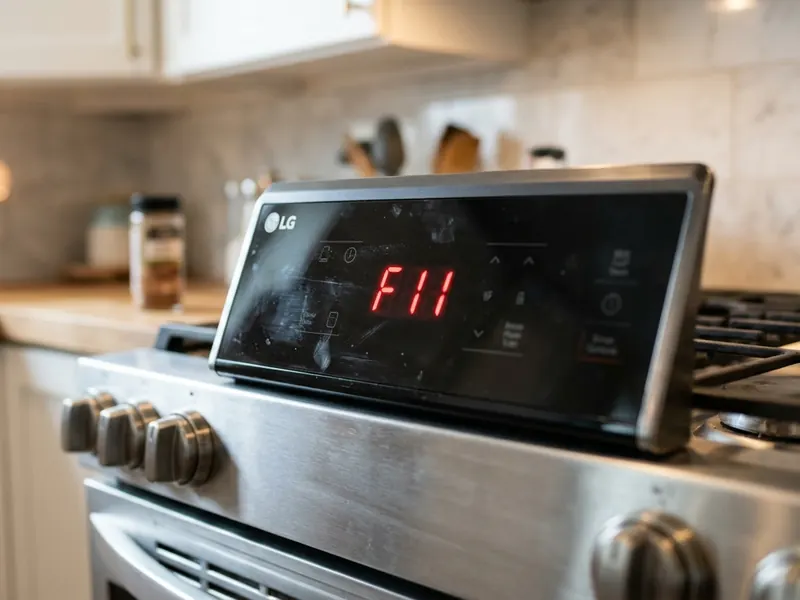
F11 | Control boards not talking | On electric ranges and wall ovens the main board and the system board lost communication for more than ten seconds. On some older LRG gas and LRE/LSE electric models F11 means the oven is not heating. |
F16 | Lower oven overheating | The lower oven stayed above 650°F for more than two minutes outside self clean. |
F17 | Lower convection fan not detected | The control could not confirm the lower oven convection fan was running for about a minute. |
F18 | Lower meat probe fault | The board lost the lower oven meat probe signal within a minute of cooking. |
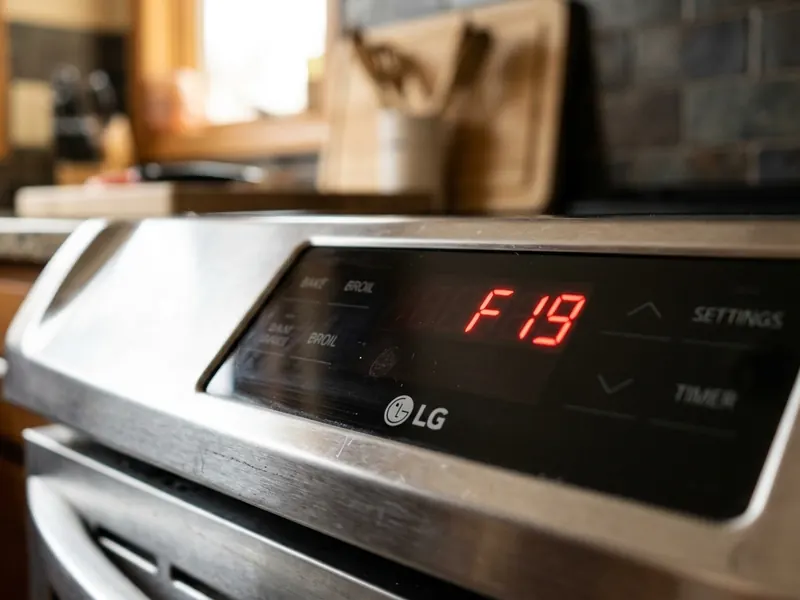
F19 | Lower oven or range not heating | The lower oven, or the oven on some single cavity models, did not rise 10°F in five minutes from a cold start. On electric units a missing second power leg causes this too, the display works but nothing heats. |
F20 | Lower door lock failed | The lower oven door lock did not register at the start of self clean. |
F21 | Right steam sensor open | The temperature sensor in the right steam system reads open, as if unplugged. |
F22 | Right steam sensor shorted | The right steam sensor reads as a dead short. |
F24 | Left steam sensor open | The left steam sensor reads open. |
F25 | Left steam sensor shorted | The left steam sensor reads shorted. |
F27 | Cooling fan stalled in self clean | During self clean the cooling fan that protects the controls was not detected running for about a minute. |
F33 | Front induction zone sensor fault | On induction ranges, the temperature sensor under the front zone is bad or not getting its supply from the board. |
F34 | Rear induction zone sensor fault | On induction ranges, the rear zone temperature sensor is out of range or missing its supply voltage. |
F36 | Induction inverter power stage failed | The power transistor on the induction inverter board failed. |
F38 | Induction boards not talking | The cooktop main board lost contact with the induction inverter board. A zone light may blink three times. |
F42 | Supply voltage too high | The induction section sensed that the voltage coming into the range is higher than it should be. |
F45 | Induction box fan fault | The cooling fan in the induction section is not running, or it is missing its 12 volt supply. |
F46 | Induction blower fan fault | The blower that cools the induction heater is not running or not getting 12 volts. |
F51 | Griddle sensor open | On gas ranges with a built in griddle, the griddle temperature sensor reads open. |
F52 | Griddle sensor shorted | The griddle temperature sensor reads shorted. |
F56 | Griddle overheating | The griddle stayed above 650°F for two minutes. Either the sensor is reading wrong or the board relay that runs the griddle gas valve stuck on. |
F59 | Griddle not heating | The griddle climbed less than 30°F in five minutes, or stayed under 100°F. |
F62 | Sous vide sensor fault | The sous vide temperature sensor reads out of range. |
F69 | Sous vide not heating | The sous vide system did not warm the water. Usually an open thermostat, an open heater or no power to the heater. |
CF1 | Left front induction sensor fault | On induction ranges, the left front zone sensor is bad or missing its supply. |
CF2 | Left rear induction sensor fault | The left rear zone sensor is bad or missing its supply. |
CF3 | Right front induction sensor fault | The right front zone sensor is bad or missing its supply. |
CF4 | Right rear induction sensor fault | The right rear zone sensor is bad or missing its supply. |
CF5 | Left inverter board failed | The power transistor on the left induction inverter board failed. |
CF6 | Right inverter board failed | The power transistor on the right induction inverter board failed. |
CF7 | Left inverter not talking | The cooktop main board lost contact with the left inverter board. A zone light may blink three times. |
CF8 | Right inverter not talking | The cooktop main board lost contact with the right inverter board. A zone light may blink three times. |
CF9 | Flex zone sensor fault | A sensor on the flex induction zone reads open or shorted. There is one in the center of each zone and one between front and rear for bridged cooking. |
CFA | Inverter over current | The induction inverter board drew too much current and shut down. |
CFC | Supply voltage too high | The induction section sensed high incoming voltage. |
CFE | Induction blower fan fault | The induction blower fan is not running or not getting 12 volts. |
CFF | Induction box fan fault | The box fan that cools the induction electronics is not running or not getting 12 volts. |
HS | Hot surface warning, not an error | HS lights up whenever the cooktop is above about 150°F. It is a burn warning, not a fault. |
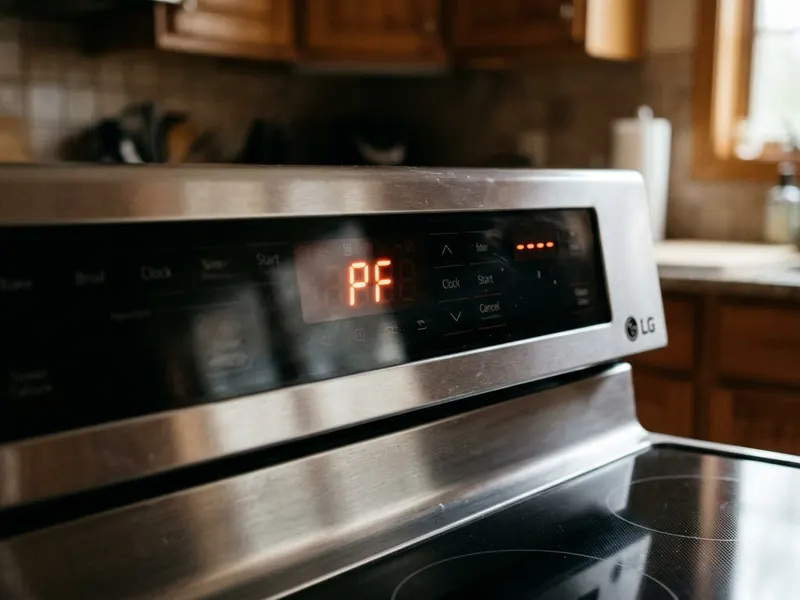
PF | Power was interrupted | PF means the range lost power for a moment, from an outage or a tripped breaker. It is not a fault. |
Sb | Sabbath mode is on | Sb means Sabbath mode. The oven holds its bake temperature, and the timer, light and alarms are disabled. It is not a fault. |