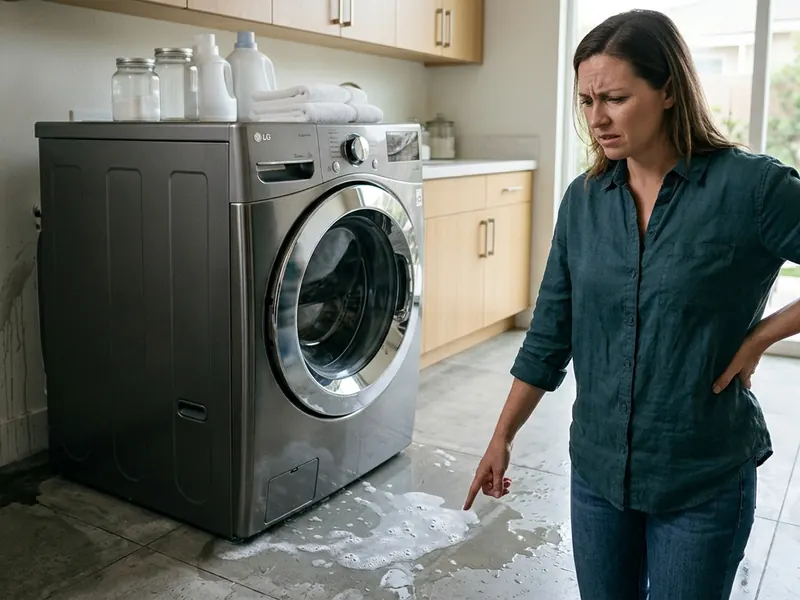
A puddle shows up under or in front of the washer after a cycle, or you find a water trail running out from the back, the door or the bottom panel.
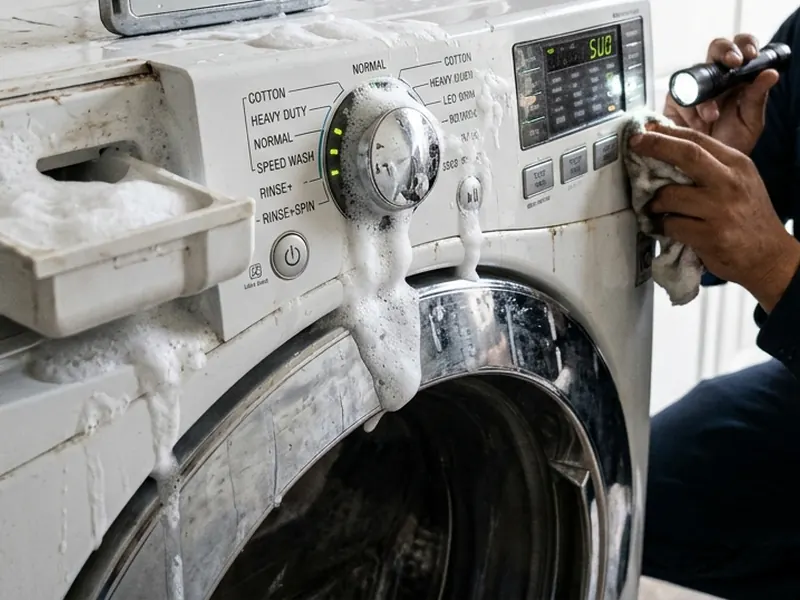
The number one leak we see. Extra soap makes foam that the machine can't rinse away, and it escapes through the rear vent grill and around the door. Cutting the dose usually ends it, though a sticky tub vent valve can make it worse.
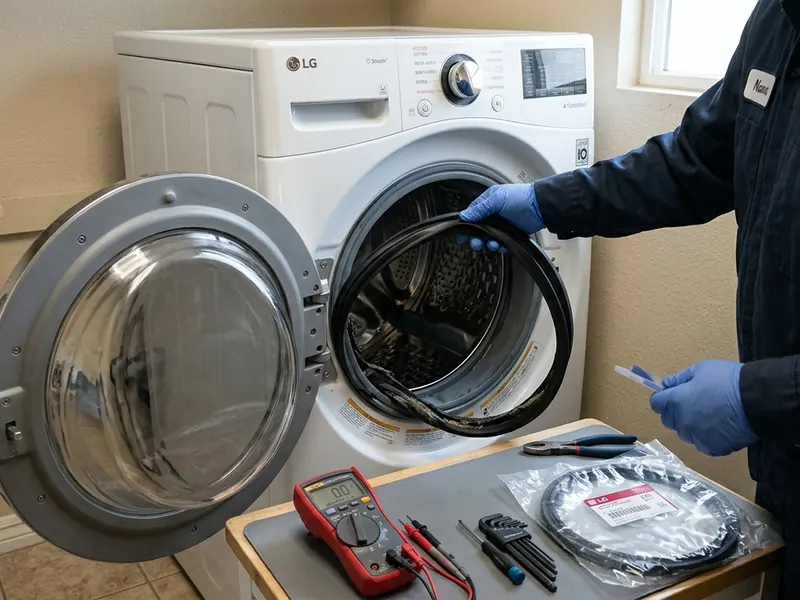
Front loaders seal the drum with a rubber boot. A small tear at the bottom or a buildup of hair in the fold drips right onto the floor in front of the machine. We replace the boot and check the drum lip it seals against.
Detergent and softener residue blocks the siphon tubes under the cups, water backs up and spills over the drawer housing. Cleaning the housing and the siphons fixes most dispenser leaks, a cracked housing gets replaced.
Hose washers harden with age, and the plastic valve body can crack. The leak only happens during fill, so it's easy to miss until the floor is wet.
A loose clamp on the pump hose, a top-load drain hose rubbing on the motor rotor, or a split in the small air tube at the bottom of the tub. On top loaders, a drain hose that's been removed has to be glued back on or it will seep.
Older LG front loaders have a two-piece tub joined with an O-ring, newer ones have a bonded tub that's replaced as an assembly. Models with an internal water heater (an H in the model number, like WM3360HRCA) can leak around the heater's rubber seal if its nut loosens. A pinhole in a top-load outer tub isn't patched, the tub is replaced.
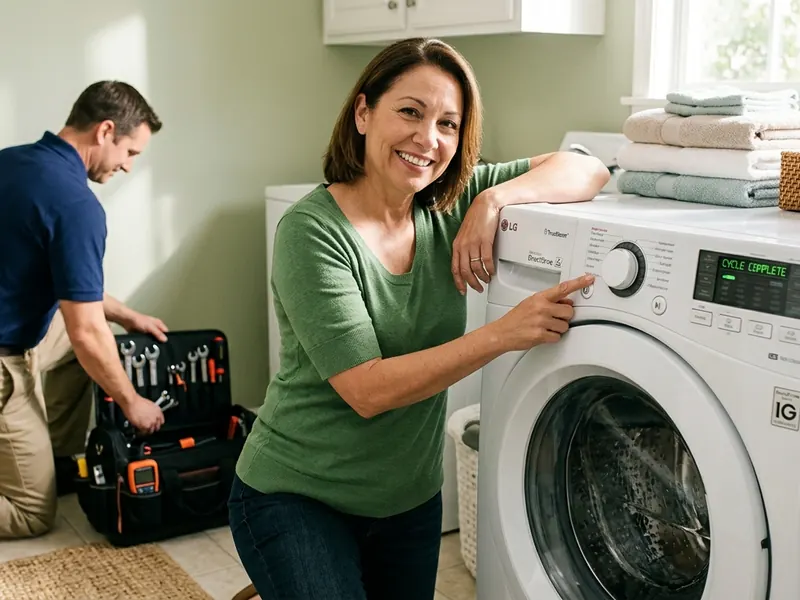
Water travels along the base before it hits the floor, so the puddle is often far from the leak. We pull the front or top panel, dry everything, then lay paper towels under the valves, pump, dispenser and tub bottom. Running one function at a time shows which towel gets wet first.
In the service test mode we open each inlet valve separately, then run the drain pump and the wash motion on their own. A leak that only shows with the softener valve open points to the dispenser path, one that only shows while draining points to the pump, its filter cap or the hoses.
We measure the standpipe height and how deep the hose goes in. LG wants the standpipe between about 24 and 96 inches tall and the hose no more than 4 inches inside. Too deep and it siphons, which also causes IE fill errors, too slow a house drain and it backs up and overflows behind the machine.
With the panel off we check the boot clamp, the bottom of the outer tub, the pressure sensor tube and, on heater models, the seal around the heater element. Stains and soap crust show the old leak path even when it isn't dripping at that moment.
Most LG washer leaks we go out on are detergent dose, the door boot or a hose connection, and they're quick fixes once we find the real spot. We always find the source before ordering a part, because a leak at the back can look exactly like a tub leak from the front. If the outer tub itself is the problem, we tell you straight what that repair involves before you decide.
Usually it's the door boot: a tear at the bottom, or hair and lint caught in the fold that breaks the seal. Heavy suds from too much detergent can also push water out around the door. Clean the boot fold first, and if it still drips, the boot likely needs to be replaced.
That points to the inlet side: worn hose washers, a loose hose connection or a cracked inlet valve. Check the hose ends with a dry paper towel during fill. If the towel stays dry outside, the leak is inside the cabinet at the valve or dispenser and needs a technician.
We wouldn't. Water under a washer soaks into the subfloor and drywall and the damage grows quietly. Shut off the faucets after each load until it's repaired, and don't run it on a carpeted or wood floor.
Factory authorized LG repair, parts on the van, 90-day warranty. Same-day across Orange County.