
The dryer's Flow Sense check measured weak exhaust airflow. The number is roughly how restricted the vent is in percent, so d95 is worse than d80.
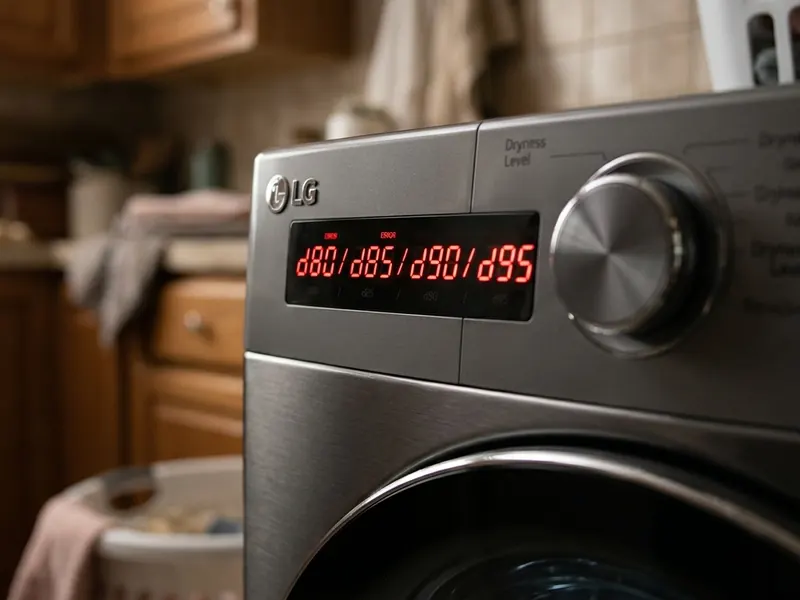
We measure exhaust back pressure, which should be about 0.6 inches of water column or less, and work out the real duct length, counting each bend as about 10 feet. Long runs, roof vents with screens and crushed flex hose are the usual causes. A vent full of lint is a fire risk, so we do not recommend running the dryer with d90 or d95 until the duct is cleaned or rerouted.
The dryer's Flow Sense check measured weak exhaust airflow. The number is roughly how restricted the vent is in percent, so d95 is worse than d80.
Clean the lint screen and look in the screen slot for lint buildup. Go outside with the dryer running and feel for strong air at the vent hood. Clear lint, nests or a stuck flap at the outside hood. Replace white vinyl or thin foil flex hose behind the dryer with 4 inch rigid or semi rigid metal duct, kept short and straight.
We measure exhaust back pressure, which should be about 0.6 inches of water column or less, and work out the real duct length, counting each bend as about 10 feet. Long runs, roof vents with screens and crushed flex hose are the usual causes. A vent full of lint is a fire risk, so we do not recommend running the dryer with d90 or d95 until the duct is cleaned or rerouted.
Factory authorized LG repair, parts on the van, 90-day warranty. Same-day across Orange County.