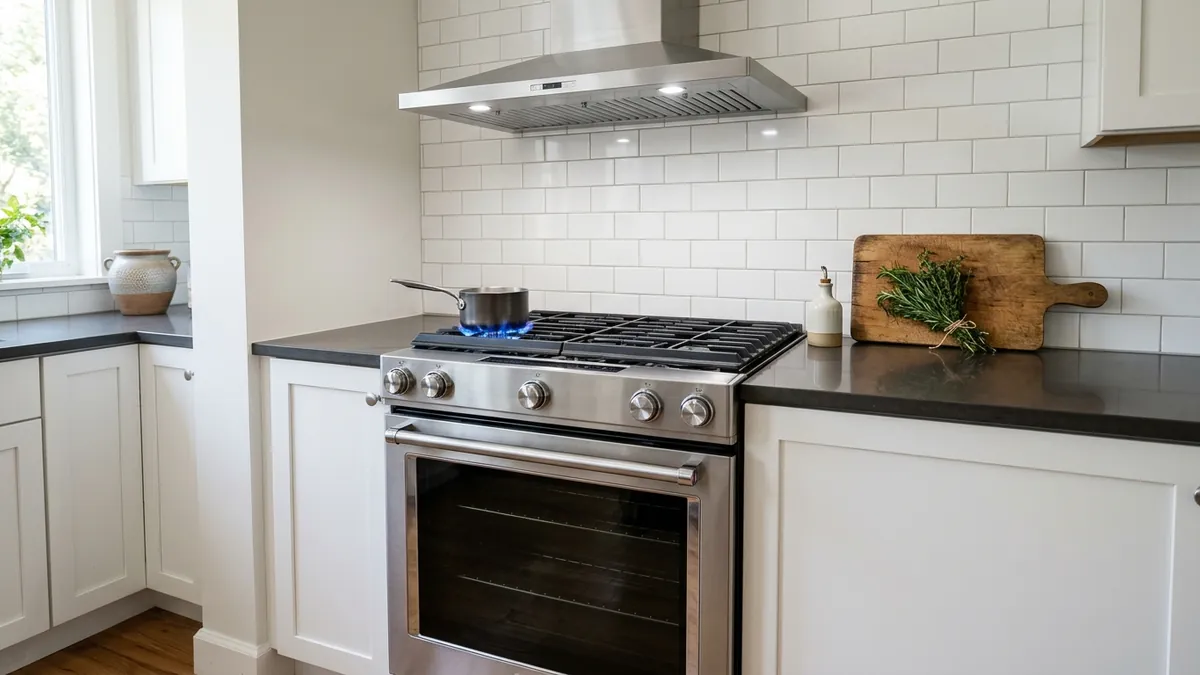
A gas burner clicks but won't light, lights unevenly or makes no spark at all, or an electric or induction element stays cold while the others work.
On a sealed gas burner the cap has to sit flat and centered or the flame can't carry from the igniter around the ring. You hear clicking, smell a little gas, and nothing lights.
If a burner makes no spark at all, the switch behind that knob or the spark module that feeds all the igniters has failed. A stuck switch also makes everything click non-stop.
Grease and soot in the small brass orifice give a weak, yellow or one-sided flame. A range moved from natural gas to propane (or back) needs the regulator flipped and every orifice changed. Skip that and the flames will be wrong on every burner.
On electric ranges a single element that stays cold is usually open inside. A good single element reads roughly 20 to 50 ohms, and dual elements have two circuits that each need to check out.
When every element is dead, it's often power: a loose or burned lug at the terminal block, or a limiter thermostat that opened and cut the whole cooktop.
Induction zones that won't heat with good cookware point at the power board, the inverter or the coil. An open fuse on the induction board usually means one coil has shorted, and that coil, its inverter and its power board get replaced together.
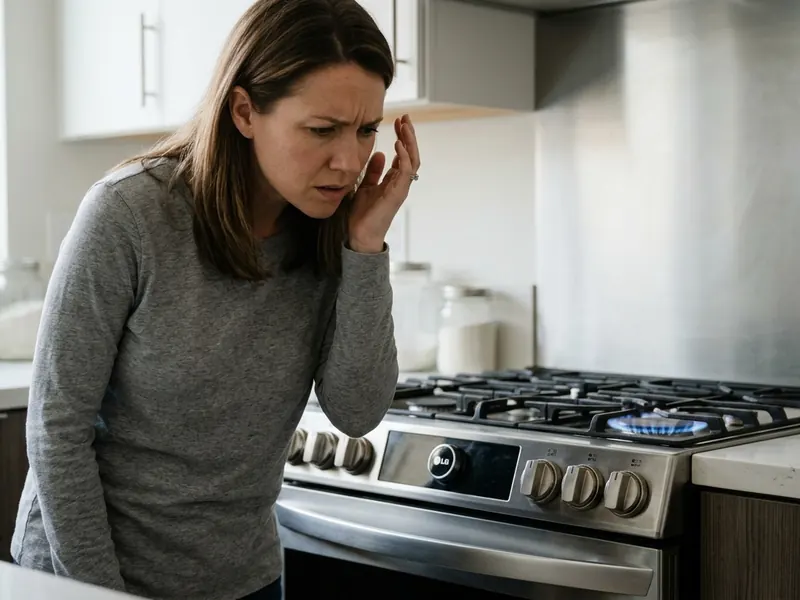
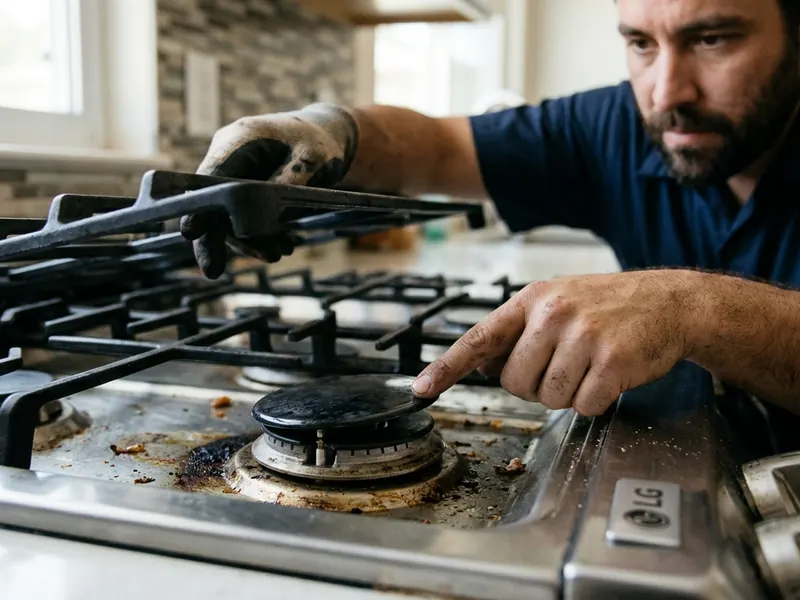
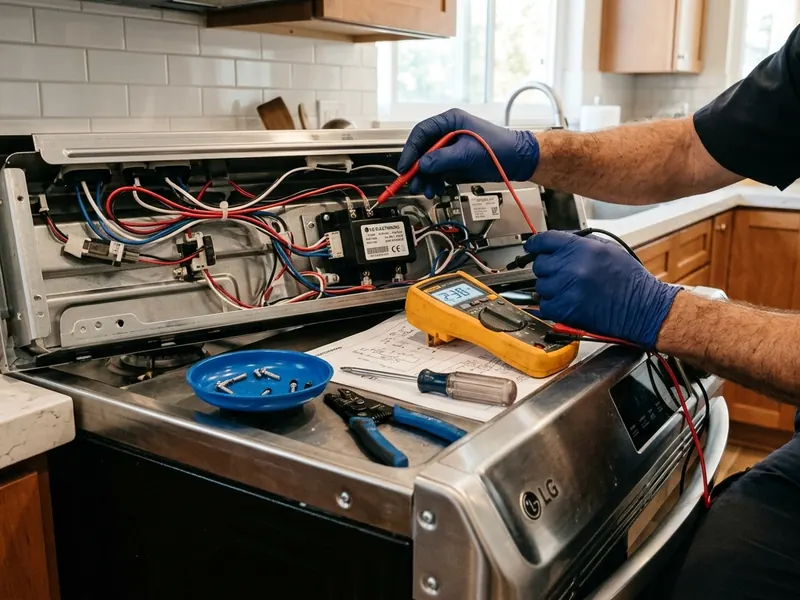
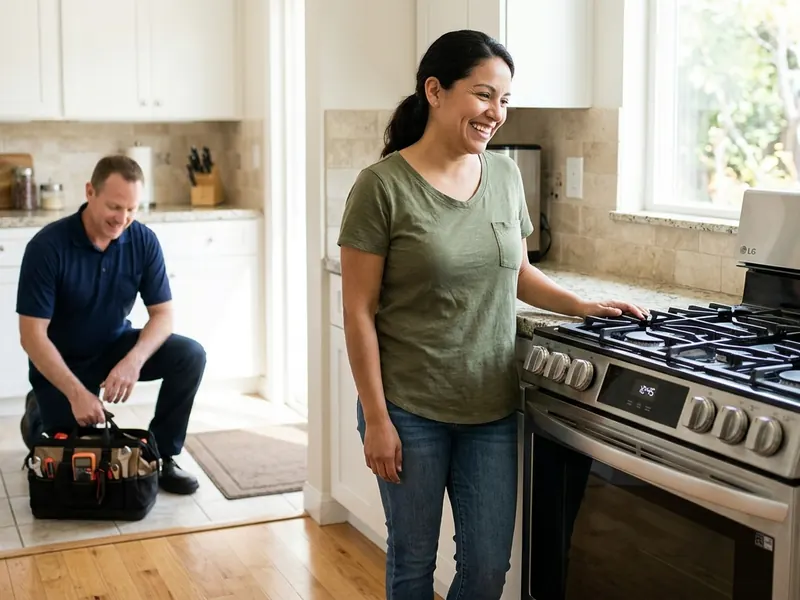
If no burner lights we start at the gas supply. If they click but don't light, we check cap seating and burner head alignment first. If there's no spark, we check for 120V at the igniter switches and at the spark module, then test the switch on that knob. We also look at the orifice, clean it if it's sooted, and confirm the range is set up for the gas you actually have.
With the power off we measure each element. A single element typically reads 20 to 50 ohms depending on size. On dual elements we read each circuit separately, about 40 ohms and 35 ohms on common LG parts, give or take 10 percent. Then with power on we check for 240V (or 208V in some condos and apartments) at the element when it's switched on. Good element with no voltage means the switch, the board or the wiring.
We measure at the terminal block: about 120V from each leg to neutral and 240V across the two legs. We tighten and inspect the lugs, because a loose lug heats up, discolors and eventually burns. Then we check the limiter thermostats on the schematic that can cut power to just the cooktop.
First the pan: it has to be magnetic and flat. If the zone can't lock on to the pan it's either the cookware or the wrong pan size for that coil. With good cookware we check the fuses on the induction boards, and if one is open we test each coil for a short to ground before replacing anything, so the new board doesn't blow on the first use.
Most clicking gas burners we see just have a cap that's not seated or a wet igniter. Beyond that it's a spark switch or the spark module, both reasonable repairs. On electric and induction tops we measure before we order, because an element, a switch and a board can all look the same from the outside.
Usually moisture or food around the igniter, or a cap that isn't seated so the flame doesn't touch the electrode. If it clicks even with all knobs off, a burner switch is stuck and needs replacing.
Induction needs magnetic, flat-bottomed cookware sized for the zone. Cast iron, enameled steel and most magnetic stainless work. If a magnet sticks and the zone still won't heat, it's a board or coil problem.
Warm, yes. The front panel, knobs and handles are designed to stay under set limits as long as the oven door closes and seals properly. If the knobs get too hot to touch, a bent hinge or a door that doesn't seal is the usual cause, and that should be repaired.
Factory authorized LG repair, parts on the van, 90-day warranty. Same-day across Orange County.